
That’s why most people walk into their first mortgage consultation feeling like they’re stepping into a storm. You’ve found the house, the neighborhood looks right, and then the paperwork starts piling up on the kitchen table. It feels heavy. It’s a lot to digest when you’re just trying to figure out if you can actually afford that extra bedroom or that specific zip code.
Missouri is a state of extremes for financing. You have the energy of St. Louis and the fast growth around Kansas City, sitting alongside the steady, community-focused rhythms of places like Rolla or Joplin. Because the local economy shifts depending on where you park your car, your approach to borrowing needs to be just as specific to your geography.
If you’re looking at property in the Ozarks or the Missouri River valley, you aren’t just fighting interest rates; you’re navigating local lending cultures. Some towns rely on big national banks, while others are driven by local professionals who know local property values better than any algorithm could.
Don’t treat a mortgage application like a grocery list where you just pick the lowest price and walk away. It’s more like hiring a mechanic for a vintage car. You need someone who understands how local appraisals work and how regional economic shifts affect your debt-to-income ratio. A national lender might look cheaper on paper, but they often lack the context of your specific town’s market.
In the Rolla area, local expertise is everything because demand for both home mortgages and business loans is incredibly high. If you want someone who lives and breathes the local economy, you might look toward professionals like John Meusch at Jefferson Bank, who operates out of an office on North Rolla Street. Having a face to put to a name in a town where everyone knows everyone makes the closing process feel a lot less clinical.
Then there’s the urban side. In St. Louis, things get more complex because of older housing stock and different zoning laws. You need a specialist who knows the nuances of the metro area. Take Amy Ameling, for example; she works out of the Maryville Centre Drive area in St. Louis and handles the needs of a much more dense, urbanized market. Whether you’re in a high-rise or a suburban split-level, the advice you get in St. Louis will look very different from what you get in a rural county.
I’ve seen people make the mistake of ignoring these regional differences. They try to apply a “one size fits all” strategy to a state that is anything but uniform. You have to decide early on if you want the specialized knowledge of a local banker or the broad reach of a large-scale broker.
Let’s get into the numbers, because that’s what actually keeps you up at night. Most people focus entirely on the purchase price of the home, but the real “monster” is the term length. You have a choice: do you want to pay more total interest over the life of the loan, or do you want to pay more every single month? It’s a constant tug-of-war between cash flow and long-term wealth.
If you go with a Fixed-Rate Mortgage, you’re essentially buying predictability. You can choose a shorter term to save a massive amount of money on interest over time, which is great if your income is stable and rising. On the flip side, a longer term lowers your monthly payment, giving you more breathing room in your budget for life’s unexpected hiccups.
It’s a balancing act. If you take the longer term, you might feel richer today, but you’re essentially paying for the bank’s peace of mind. If you take the shorter term, you’re forcing yourself to build equity faster. There is no “right” answer, only the answer that fits your actual bank account balance at the end of the month.
To help you visualize this, consider these common scenarios:
Can you really afford that extra mortgage payment if you lose your job for two months? That question matters more than the interest rate itself.
One of the most common questions I hear is: “Can I get a personal loan and a mortgage at the same time?” The short answer is yes, but the long answer is that it’s incredibly risky. If you’re in the middle of a mortgage application, the last thing you want to do is suddenly add a new line of credit to your credit report. It changes your debt-to-income ratio overnight.
Lenders look at your “capacity” to pay back a loan. If you go out and take out personal loans Missouri residents often use for home renovations or debt consolidation, you’re telling the mortgage lender that you have more monthly obligations than you did yesterday. This can throw a wrench in your mortgage approval, even if you already have the cash in hand. If you’re planning to use a personal loan to fund down payment costs, be very careful about the timing.
If you find yourself needing quick cash in places like Joplin, you might see many options popping up in local searches. People often look for things like TitleMax or various payday loan services to bridge a gap. While these can provide immediate liquidity, they’re often the most expensive ways to borrow money. They are a band-aid, not a long-term solution for someone trying to build home equity.
I always suggest that if you’re buying a house, you should stop all other borrowing activities at least six months before you apply for the mortgage. You want your credit profile to be as static and predictable as possible during the underwriting process. Any sudden movement in your debt levels is a red flag for a loan officer.
| Loan Type | Primary Use | Impact on Mortgage | Interest Rate Profile |
|---|---|---|---|
| Mortgage | Home Purchase | The main event | Generally lowest |
| Personal Loan | Consolidation/Renovation | Can lower DTI capacity | Moderate |
| Title/Payday Loan | Emergency Cash | High risk to credit | Very high |
Rates aren’t just a single number floating in the air; they’re influenced by your specific location and the type of property you’re buying. If you’re looking in Saint Joseph, for example, the rates and loan types might vary slightly from what you see in the St. Louis metro area due to property values and local lender competition. You can actually compare Saint Joseph, MO mortgage rates and loans by entering your specific property value and loan amount to see what the math actually looks like for your situation.
It’s a smart move to use comparison tools, but don’t get lost in the data. A “low rate” is meaningless if the closing costs are astronomical. Some lenders will offer a razor-thin interest rate but then bake in thousands of dollars in administrative fees that you won’t see until the final signing. Look at the APR, not just the advertised interest rate.
If you’re feeling overwhelmed by the number of lenders out there, you might want to check out how WalletHub ranks the best mortgage brokers in Missouri. They look at user reviews, which can give you a sense of who actually answers the phone and who treats you like a number. Sometimes, a slightly higher rate from a broker who actually explains the process is worth more than a lower rate from a bank that ignores your emails.
Don’t let the numbers intimidate you. Everyone starts somewhere, and even the most seasoned homeowners once sat at a kitchen table wondering if they could afford their first front door.
Keep it simple.
Yes, but taking out a personal loan can increase your debt-to-income ratio, which may impact your mortgage approval or interest rates.
Monthly payments typically range from $500 to $700 depending on your interest rate and the loan term length.
You generally need an annual gross income between $65,000 and $85,000, depending on your existing debts and the down payment amount.
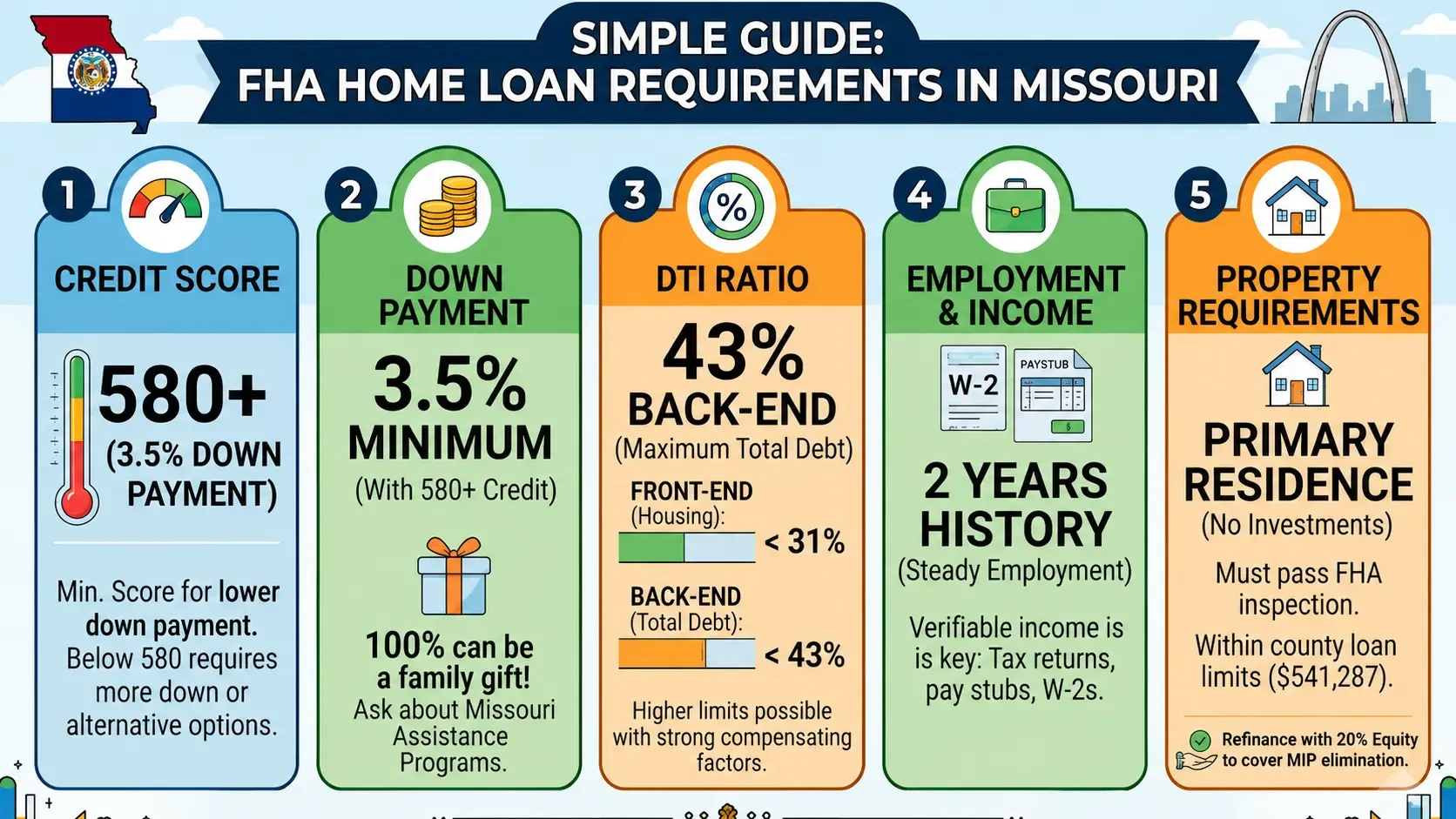
While conventional loans typically require a 620 score, FHA loans in Missouri may allow you to purchase a home with a score as low as 580.
A personal loan can change your credit mix and debt obligations, so it is best to consult a mortgage professional before applying for both simultaneously.